
Comté is never just Comté
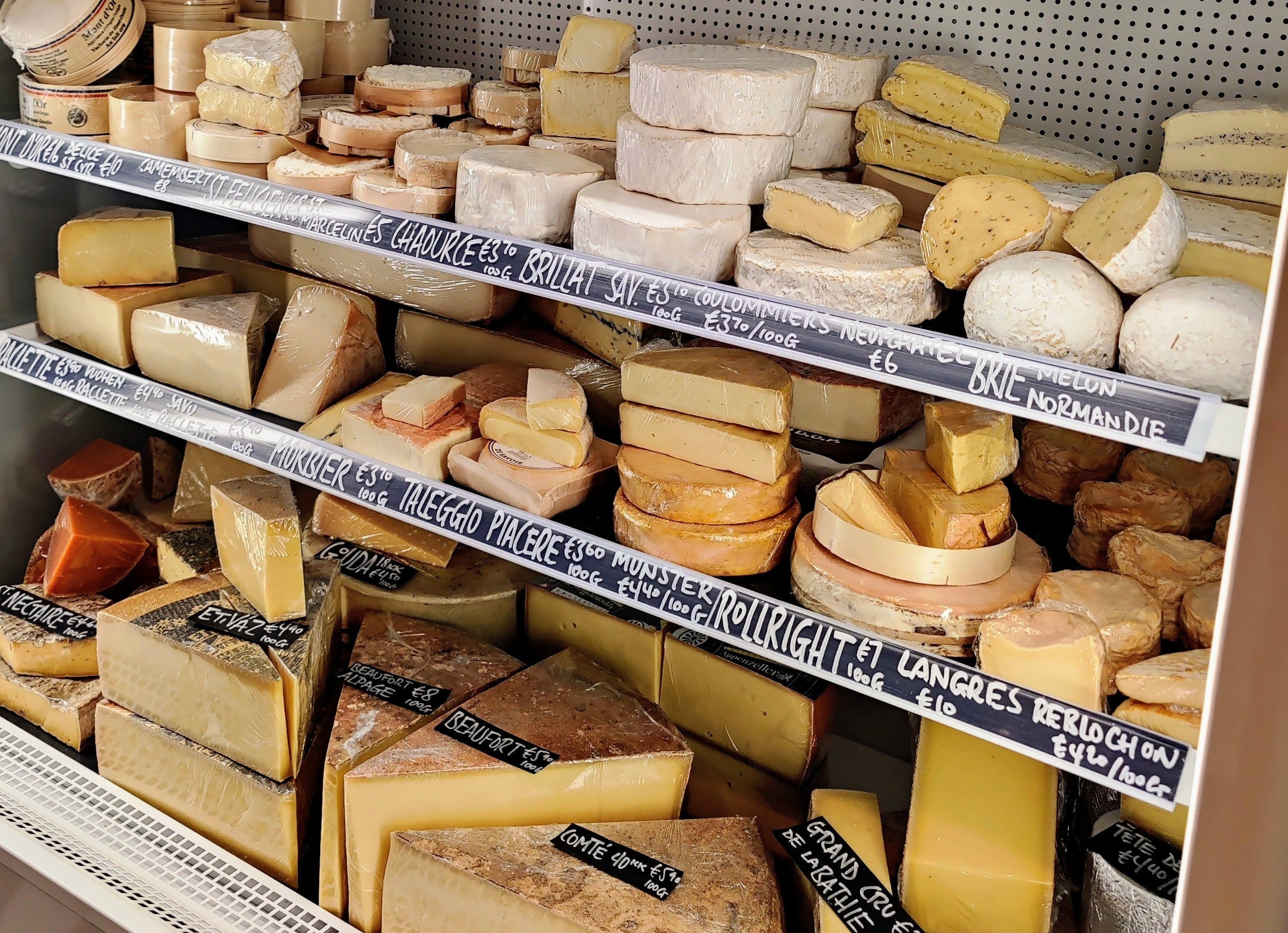
It’s easy to think of cheese as something fixed.
You find a favourite - perhaps a piece of Comté, Ossau-Iraty, or a soft goat’s cheese - and expect it to taste the same every time. Familiar. Reliable.
But in reality, cheese doesn’t quite work like that.
One of the most fascinating things about good cheese is that it changes - sometimes subtly, sometimes surprisingly - depending on who made it.
A helpful comparison is wine. Most of us wouldn’t expect every bottle of Pinot Noir to taste identical. The grape may be the same, but the style varies depending on where and how it’s made. The same goes for Champagne - despite strict rules, it produces a wide spectrum of flavours.
Cheese works in much the same way.
Comté always comes from the same region in France and is made according to strict regulations. Yet each cheesemaker makes small decisions that shape the final result. One Comté may be soft, nutty and rounded, while another is deeper, more savoury, almost brothy.
The same applies to many cheeses. Something that looks familiar can taste entirely new.
Where do the differences come from?
Much of it comes down to the person behind the cheese.
Everything begins with the milk — not just whether it’s raw or pasteurised, but where it comes from. What the animals eat, where they graze, and the time of year all play a role. Spring milk is often lighter and more floral, while autumn milk tends to be richer and more full-bodied.
Then come the cheesemaker’s choices:
- Is the milk raw or pasteurised?
- Is the cheese made on a single farm or from collected milk?
- Are traditional methods followed, or is consistency the priority?
And finally, ageing. Some cheeses are matured slowly in natural cellars, where time and environment shape the flavour. Others are aged in controlled conditions to ensure consistency.
None of these approaches are inherently better or worse - but they do produce very different cheeses.
Why does this matter?
If you’ve ever thought you didn’t like a certain type of cheese - especially goat’s cheese - it may simply be that you haven’t found the right one yet.
Tasting cheeses from different producers can completely change your perception. Goat’s cheese can be fresh and delicate rather than sharp. Comté can be buttery and sweet, or deep and savoury.
Once you start noticing these differences, choosing cheese becomes far more interesting. Instead of asking “Do I like this cheese?”, you might begin to ask:
- Who made it?
- How was it produced?
- What makes this one special?
Same recipe, different hands
You can think of it like cooking.
Give ten people the same recipe and the same ingredients, and the result will never be exactly the same. One adds a little more salt, another lets it cook longer, a third makes small instinctive decisions along the way.
The recipe sets the framework - but the cook defines the outcome.
Cheese works in exactly the same way. Tradition and rules provide the structure, but the final flavour depends on who makes it.
A small shift in perspective
You don’t need to be an expert to appreciate this.
Simply tasting the same style of cheese from different producers can open your eyes surprisingly quickly. It’s one of the easiest - and most enjoyable - ways to explore flavour.
Because cheese isn’t just the name on the label.
It’s a place, a person, and a series of small decisions that ultimately end up on your plate.
So next time you’re at the cheese counter, try asking: what makes this cheese special?
Comments