
Finishing touches: a guide to a better cheese board
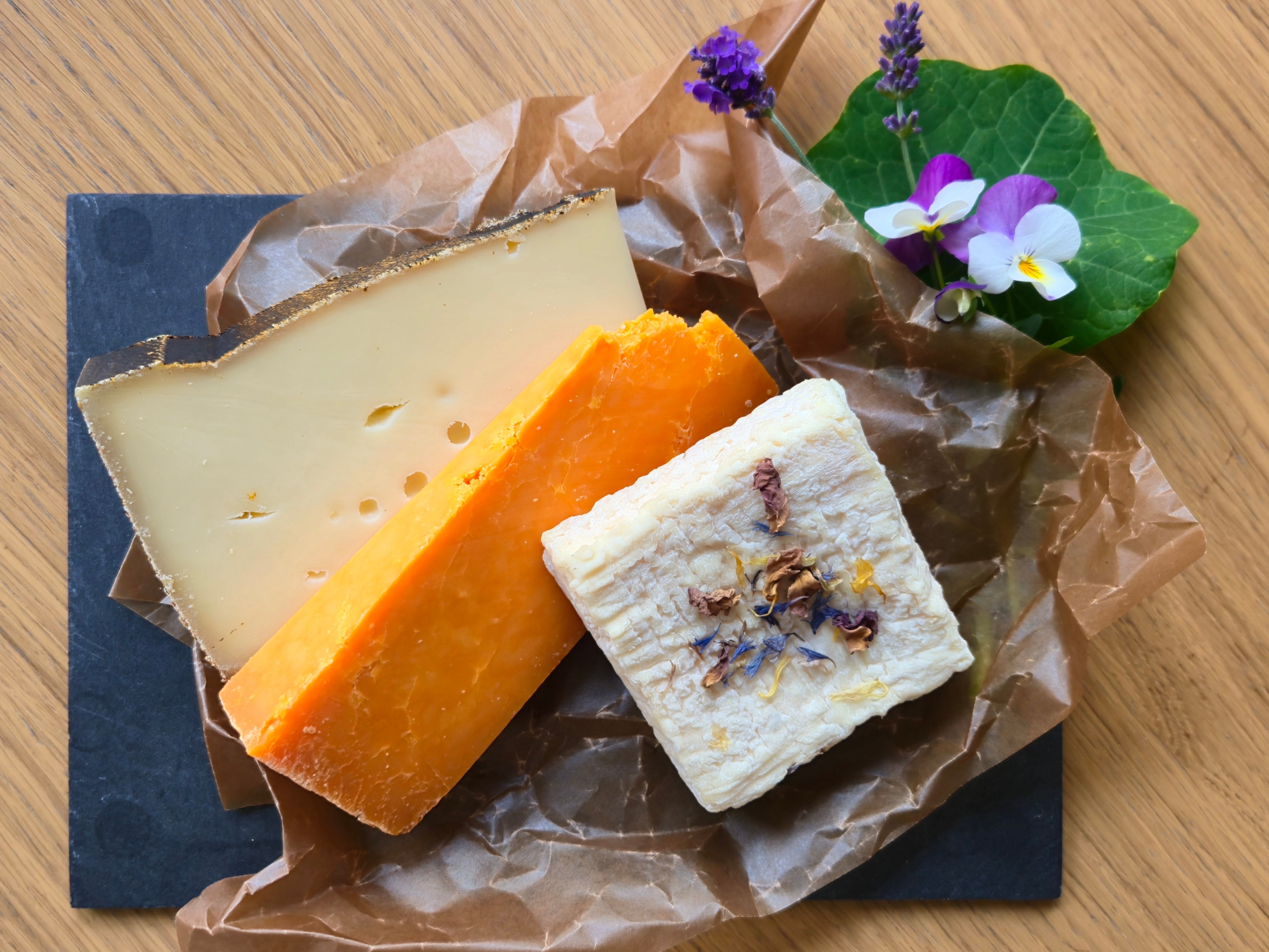
A cheeseboard feels often slightly ceremonial. The kind of gesture added at the end because it feels like it ought to be there.
But at its best, it is far more than a footnote. It’s the final flourish—the one that lingers. And like any ending, it either draws everything together or quietly lets it unravel.
Most cheeseboards fall short for the same reason: they aim to look right, rather than feel right. In reality, three things determine the outcome.
1. Seasonality isn’t a theme - it’s the starting point
Cheese is not a static product. It moves with the seasons in a way that is surprisingly direct: soil, animals and weather all show through, unfiltered.
You wouldn’t serve asparagus in November or strawberries in February without something feeling slightly off. The same logic applies to cheese, even if we don’t always think about it quite so consciously.
In spring, cheeses are bright and alive. Fresh goat’s cheeses can taste almost green—lively, lightly acidic, like the first proper grass after winter. In summer, everything softens: textures loosen, flavours round out, edges blur.
By autumn, structure returns. Hard cheeses develop nuttiness and depth. In winter, things go further still: washed rinds, blues and long-aged cheeses bring salt, umami and weight.
A cheeseboard that looks the same in April as it does in November feels slightly disconnected from reality. Not just out of season, but out of step with the moment.
2. Balance is about timing, not just variety
“Something soft, something hard, something blue” is a good place to start - but it’s not where the thinking should end.
What matters more is where the cheese sits within the meal. It arrives at a point where the palate has already been shaped.
If dinner has been light - salads, fish, bright flavours - a heavy, salty cheeseboard can feel jarring. What’s needed then is lift: freshness, acidity, something that carries the thread forward rather than stopping it short.
After a long, generous meal, however, restraint won’t do. The cheese needs enough presence to come through at all. This is also where the drink matters: a firm white or a sweet, nervy dessert wine - something like Tokaji - can restore structure and wake up a palate that’s beginning to tire.
Three cheeses is almost always enough. The point is not abundance, but coherence.
3. The small details do the real work
By the time cheese reaches the plate, most of the real work has already been done—on the farm, in the dairy, in the ageing room, and in the hands of the cheesemonger. What remains is simply how you allow it to come into its own.
Temperature is the first thing. Cold cheese is closed, slightly mute. Even half an hour at room temperature (no more) brings its true character forward.
Accompaniments are where things often drift off course.
For some reason, a cheeseboard seems to automatically mean seeded crackers and fig jam, regardless of what’s actually on the plate. They appear as if by default - part of the set dressing.
Often, they aren’t needed at all.
Good cheese asks for very little beyond the space to be itself - and perhaps a glass of something alongside. The wrong accompaniment doesn’t support the cheese; it obscures it.
If you do include extras, they should earn their place. Sweetness works when there’s salt and intensity - hence its classic pairing with blue cheese. Freshness can lift softer, creamier styles. But not everything needs to be on the same plate.
And then there’s the drink. Cheese is not a neutral partner. It is rich, salty, and often surprisingly demanding. Sweet wine with blue works because salt and sugar balance each other. A dry, incisive white, meanwhile, does what red wine often cannot: it cuts through the fat and restores structure.
This doesn’t need overthinking. Often, a small amount of intention is enough to make the whole thing feel clearer - and far more enjoyable.
A good cheeseboard doesn’t end a meal. It completes it.
Comments